What to expect
Choose the outing that fits your day.
Start with one expectation: these are wild animals
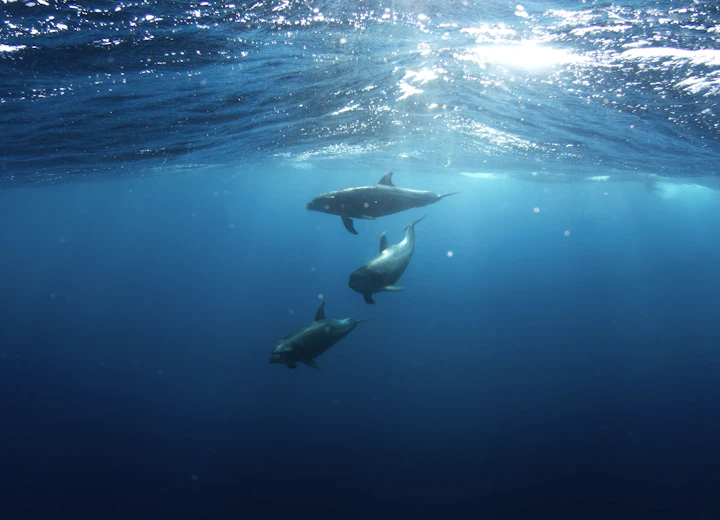
A dolphin-watch boat is not visiting an exhibit.
Wild dolphins decide where they go.
A responsible tour can know common habitat, local patterns and where animals have recently been seen.
It cannot guarantee that a wild dolphin will appear beside the boat at 10:42 a.m.
That uncertainty is part of the experience.
“Eco-tour” can mean several different things
Around Key West, wildlife-oriented water trips can include:
Dolphin-focused boat trips
The main goal is finding and observing wild dolphins, often with snorkeling added afterward.
Backcountry sailing
A slower trip through shallow waters and islands, with wildlife and scenery carrying as much weight as any single animal encounter.
Kayak-focused eco trips
Best for getting close to mangroves and shallow habitat without using speed as part of the experience.
Snorkel + wildlife combinations
Useful when a group wants both wildlife viewing and time in the water.
Sandbar / backcountry combinations
These can be fun, but decide whether the trip is really an eco-tour or primarily a social sandbar outing with wildlife potentially encountered along the way.
None is inherently superior.
They solve different trip goals.
The habitat is the real attraction
Florida Keys National Marine Sanctuary protects interconnected ecosystems including:
- coral reefs,
- mangrove forests,
- seagrass meadows,
- and surrounding marine habitat.
NOAA specifically promotes eco-tours as a way to experience those connected environments while following responsible wildlife-viewing practices.
That broader habitat perspective makes a good wildlife trip worthwhile even on a day when no dolphin provides a close photo opportunity.
What might you see?
Potential encounters can include:
- bottlenose dolphins,
- sea turtles,
- rays,
- sharks,
- wading and seabirds,
- reef fish,
- and other marine wildlife.
Treat all of those as possibilities.
Not an itinerary.
If a tour description starts sounding like a guaranteed wildlife checklist, reset your expectations.
Responsible dolphin viewing means giving them space
NOAA Fisheries recommends that vessels remain at least 50 yards from dolphins and porpoises and limit viewing of individual animals or groups to about 30 minutes.
Vessels should not chase, surround, leapfrog or intentionally accelerate toward dolphins.
Feeding or harassing wild dolphins is illegal.
NOAA also advises people not to swim with, pet, touch or attempt to interact with wild dolphins.
This produces an important booking rule:
An operator promising aggressive close interaction is not offering a better wildlife experience.
What if dolphins approach the boat?
Wild animals do not read distance guidelines.
If dolphins approach on their own, NOAA guidance calls for vessel operators to slow down and avoid manipulating the encounter. Operators should not chase after them once the animals move away.
The difference is who initiated the approach.
Blue Star operators
NOAA's Florida Keys National Marine Sanctuary maintains a Blue Star program for operators that commit to responsible wildlife-viewing and environmental practices.
That does not mean every non-Blue-Star company is irresponsible.
It is simply one useful signal when comparing eco-tour businesses.
Dolphin watch versus backcountry tour
Choose a dolphin-focused trip if
Seeing wild dolphins is a major personal priority and you understand sightings remain natural rather than staged.
Choose a broader backcountry trip if
You care about:
- scenery,
- mangroves,
- birds,
- kayaking,
- shallow water,
- and the ecosystem as a whole.
The second option is often more resilient to wildlife luck.
The day can still be excellent without a single species becoming the whole point.
Large boat or small boat?
Larger vessel
Usually provides:
- more deck space,
- restrooms,
- easier movement,
- and more stability.
Small boat
Usually provides:
- fewer passengers,
- more flexibility,
- and a quieter feel.
Kayak
Provides:
- the lowest-speed experience,
- access to very shallow habitat,
- and more physical participation.
Again, choose the experience before comparing operators.
Is this a good family activity?
Often yes.
A wildlife/backcountry trip can be one of the strongest family water activities because the experience does not require everyone to swim or operate equipment.
But match the duration to the child.
A nature-loving eight-year-old may happily spend hours looking for dolphins and birds.
A younger child who is done with boats after 45 minutes will not become more interested because the tour is educational.
Wildlife trip or aquarium?
For children who need guaranteed animals and predictable duration, a land-based wildlife or aquarium attraction may actually make more sense.
For families excited by the uncertainty of seeing animals in natural habitat, choose the boat.
Those are different experiences and should not be sold as substitutes for one another.
The practical answer
For the best all-around Key West nature experience, choose a trip where dolphins are one possibility inside a larger backcountry experience, rather than the only reason the trip can succeed.
Look for a crew that talks about habitat, responsible viewing and conditions.
The strongest wildlife tour leaves you understanding more about the waters around Key West even if no animal performs for the camera.
Compare the family activity guide or a snorkeling-focused trip if underwater time is the priority.